How do you brief a backpack compartment layout for school or travel?
Use the load, access points, and carrying fit to turn a backpack concept into a measurable sourcing brief.
Assign a job to every compartment
A useful backpack brief describes what each space must protect, separate, or reach quickly. Start with the daily load: books or binders, a laptop or tablet, small stationery, a drink, and any clothing or footwear. Decide which items need a padded or close-to-body position, which can share the main compartment, and which should stay in an exterior pocket.
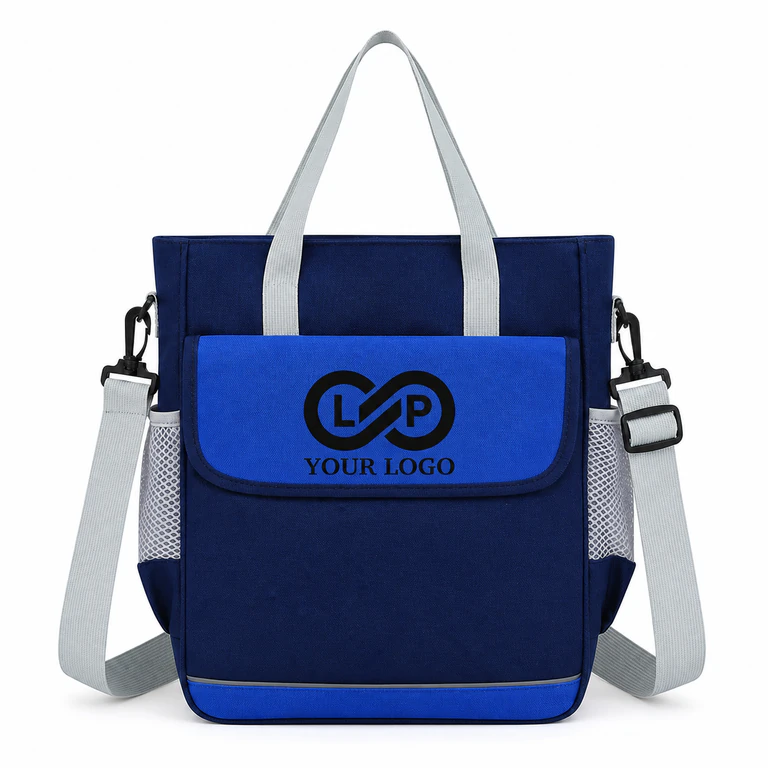
The LogoPress LP0817 catalog record describes a large-capacity Oxford school tote backpack with a main compartment for textbooks, notebooks, and binders plus smaller pockets for pens, pencils, and calculators. It lists 11.42 × 12.2 × 4.33 inches and identifies padded straps and a cushioned back panel. The record does not provide a laptop sleeve size, divider count, load rating, or wearer fit range, so those questions belong in sample review.
Compare access with protection
Name the access priority for each pocket: open in one motion, protected from crushing, separated from wet items, or kept out of sight. Check whether a zipper pull can be reached while worn and whether the opening is wide enough for the intended object. A front pocket simplifies access to small items but can become crowded if its depth and organization are undefined.
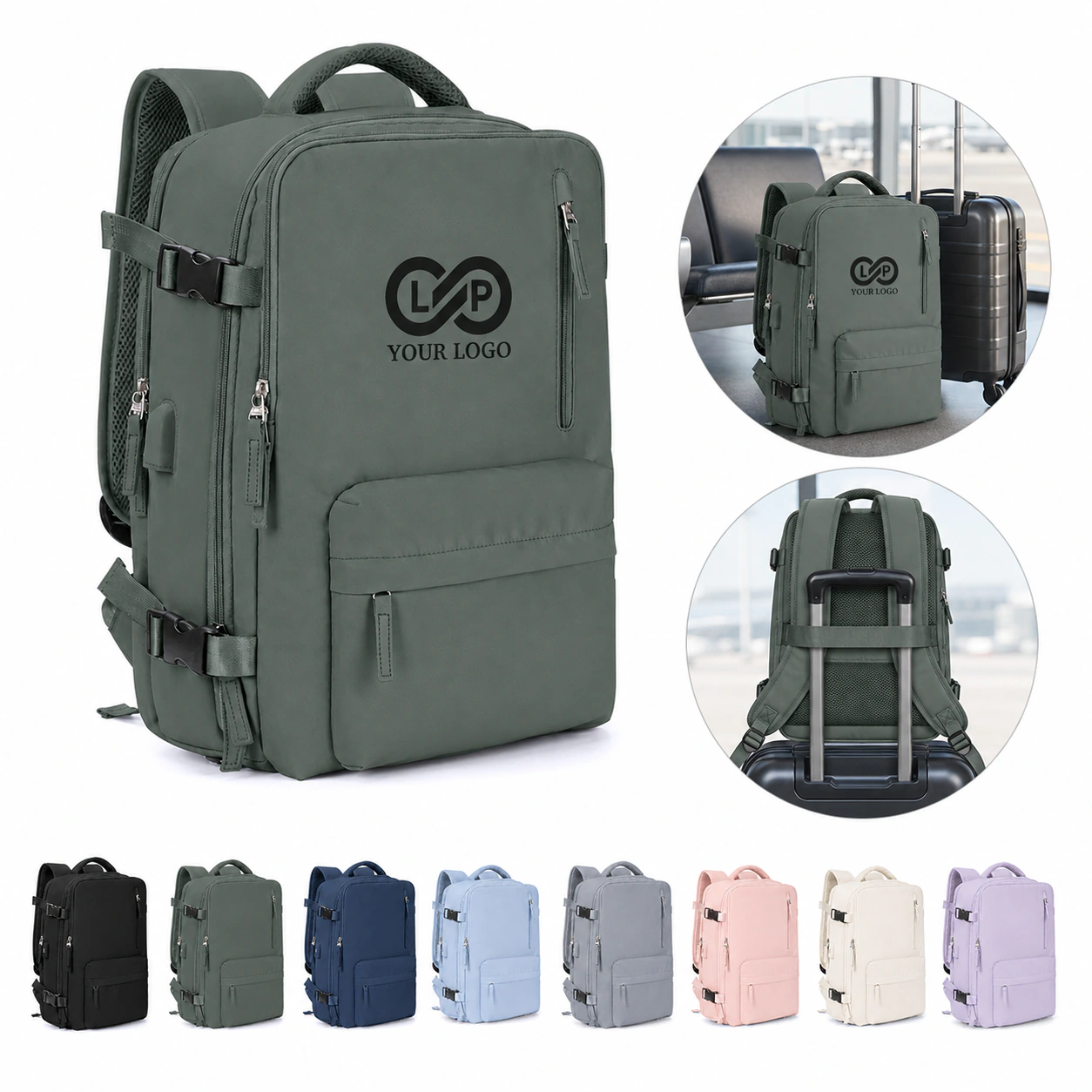
For a travel requirement, the LP0958 record describes a waterproof polyester backpack with a main compartment that opens 180 degrees, a separate shoe compartment, a high-density waterproof wet bag, anti-theft pockets, and a trolley cover. Its listed size is 18.5 × 12.99 × 8.66 inches. These features remain subject to confirmation against the selected colorway and production sample.
Test the carry fit with the load inside
The American Academy of Pediatrics recommends a backpack proportional to the child, with two broad shoulder straps, a padded back, and compartments that help distribute contents; it also advises keeping the loaded bag at no more than 15% of body weight. Use this as a planning checkpoint for school programs while following applicable school or medical guidance. A product record cannot confirm fit. Test the bag on the intended wearer or define the size range and adjustment points required.