What to include in an insulated stainless-steel tumbler brief | LogoPress
What to include in an insulated stainless-steel tumbler brief
A specification-first guide to capacity, dimensions, finish, decoration and document questions for a branded tumbler.
An insulated tumbler brief should let a supplier identify the exact vessel, decoration surface and delivery context before the quote is treated as a commercial record. The most useful starting point is a compact specification sheet built around the drinker’s routine.
Choose the volume for the distribution moment
The LogoPress LP2292 is listed as a 500 ml stainless-steel coffee thermos insulated tumbler. That volume is a clear starting point for a coffee, office, travel or outdoor program, but the project brief should still name the beverage context and expected handoff. A 500 ml format may suit a single daily serving; the right choice depends on the kit, recipient and carrying pattern.
Use the published dimensions as a fit check
LP2292’s catalogue size is 2.74 × 2.74 × 9.65 inches. Record those dimensions beside the target cup holder, gift box, mailer or event bag. The catalogue describes the item as lightweight and portable and says it fits most cup holders; treat that wording as catalogue information to be checked against the actual destination and packaging plan, not as a universal fit guarantee.
Specification
LP2292 catalogue point
Project question
Capacity
500 ml
Is the intended serving size right?
Material
Stainless steel
What material document is needed?
Listed size
2.74 × 2.74 × 9.65 in
Will it fit the planned pack?
Finish
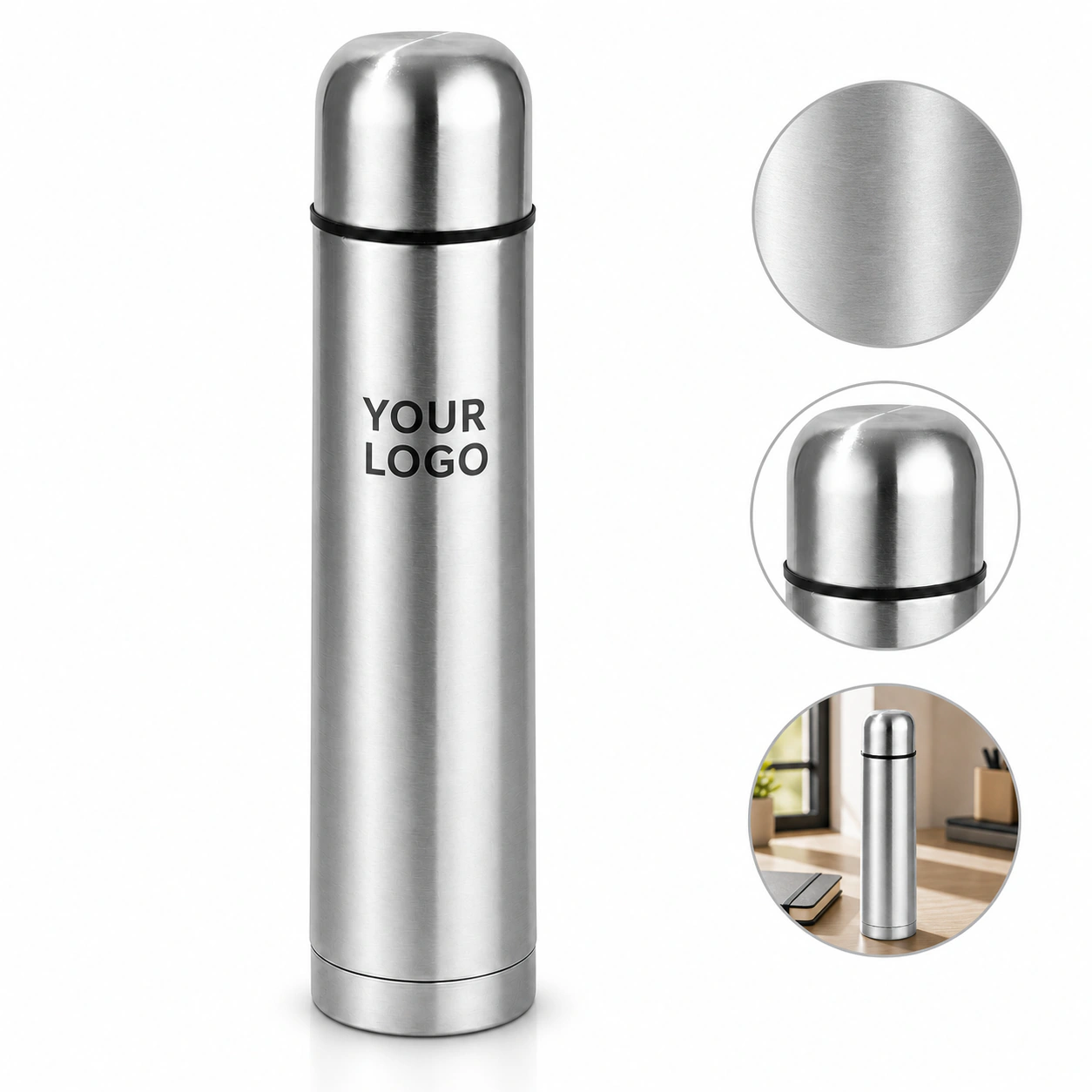
Silver stainless appearance in image
Is this the approved finish or a reference?
Decoration
Logo shown on body in catalogue image
Which method, area and proof apply?
Related products
Separate insulation language from test requirements
The product description says the tumbler uses double-wall vacuum insulation for hot and cold drinks and is condensation-resistant. Those are product-level catalogue statements. A customer brief should ask for the applicable test method, time interval, starting temperature and use conditions if temperature retention is material to the project. Do not convert “for hours” into a guaranteed result without a project-specific specification or test record.
Make the lid and finish reviewable
The primary image shows a tall cylindrical body with a rounded metal-colored top and a dark seam. Include a reference image, desired finish, cap color and decoration face in the brief. Ask whether the chosen decoration is compatible with the curved body and how artwork should be supplied. A proof should show scale and placement on the selected finish before bulk production is approved.
Ask for the right documents
FDA explains that food-contact substances are assessed for intended use and conditions, and its condition tables distinguish beverage types and temperature scenarios. For a beverage container, ask which material and use documents apply to the selected configuration, along with care instructions. Keep those documents connected to the quoted SKU and finish; a generic material name or an image cannot answer every compliance question.
Tumbler brief checklist
Product number LP2292 and 500 ml target
Beverage, recipient and distribution context
Published size and planned pack dimensions
Finish, cap and decoration surface
Artwork, imprint colors and proof scale
Any temperature-retention requirement and test conditions
Applicable material, use and care documents
Quantity, destination and required delivery window
This structure gives a buyer a practical comparison point while leaving fit, decoration, documentation, delivery and commercial conditions to the formal project review.
Sources
LP2292 catalogue record — product name, 500 ml listing, material, listed dimensions and catalogue description.